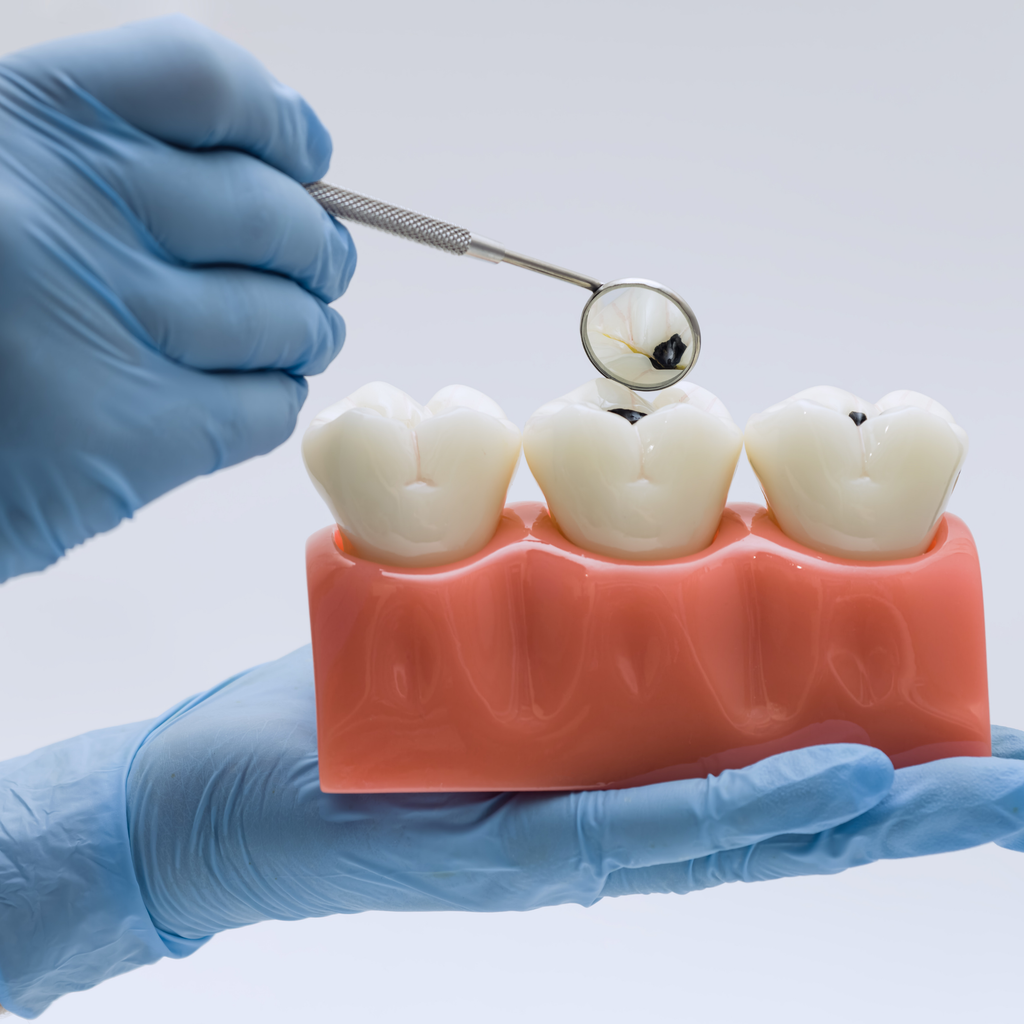
If you have been told you have a cavity, or you have noticed a small dark spot on one of your teeth, you may be wondering whether you really need treatment.
Can a cavity go away on its own?
It is a very common question, particularly if the tooth is not painful. After all, if there is no toothache, is there really a problem?
The answer depends on how early the tooth decay is caught.
Very early tooth decay can sometimes be stopped or reversed before a physical cavity develops. However, once a genuine hole or cavity has formed in the tooth, it cannot repair itself naturally. At that point, professional dental treatment is usually needed.
In this guide, we explain the difference between early tooth decay and an established cavity, what you can do to protect your teeth and why leaving a cavity untreated can cause bigger problems later.
What is a cavity?
A cavity is a damaged area in a tooth caused by tooth decay.
Your mouth naturally contains bacteria. When you eat foods and drinks containing carbohydrates and sugars, these bacteria can produce acids. Repeated exposure to these acids can gradually weaken the enamel that protects your teeth.
Over time, minerals are lost from the enamel. This process is known as demineralisation.
Your saliva naturally helps replace some of those minerals. This process is called remineralisation.
When remineralisation keeps up with the damage, the tooth can remain healthy. But if acid attacks happen too frequently, the enamel can continue to weaken.
Eventually, a physical hole can develop.
That is what we commonly refer to as a cavity.
Can a cavity actually heal itself?
This is where the distinction between early tooth decay and an established cavity is important.
If tooth decay is caught at a very early stage, before a hole has formed, the process may be stopped or reversed.
Your dentist may refer to this as an early enamel lesion or initial tooth decay.
At this stage, improving oral hygiene, using fluoride toothpaste and reducing frequent sugar and acid exposure can help the enamel regain minerals.
However, once the enamel has broken down enough for a physical cavity or hole to form, the tooth cannot rebuild that missing structure by itself.
A filling or another form of dental treatment may then be required.
What does early tooth decay look like?
Early tooth decay does not always cause pain.
One of the earliest visible signs can be a white or chalky area on the surface of a tooth. This can indicate that minerals have been lost from the enamel.
As decay progresses, the area may become:
- Yellow or brown
- Darker in colour
- Rough or uneven
- Sensitive to hot, cold or sweet foods
- A visible hole or indentation
However, you cannot always identify a cavity simply by looking in the mirror.
Some cavities develop between teeth or in areas that are difficult to see. This is one reason regular dental examinations are important.
Why doesn’t an established cavity heal itself?
Tooth enamel is extremely hard, but unlike skin or bone, it cannot regenerate once a substantial amount of its structure has been lost.
Your saliva can help remineralise weakened enamel, but it cannot grow back a section of tooth that has already disappeared.
Think of it as the difference between a small scratch and a hole.
A small area of mineral loss may be repaired or strengthened. But once there is a physical hole in the tooth, there is missing tooth structure that needs to be addressed.
This is why treating tooth decay early is so important.
Can brushing make a cavity disappear?
Good brushing can help prevent tooth decay from getting worse, particularly when fluoride toothpaste is used correctly.
However, brushing cannot fill an established hole in a tooth.
Brushing twice a day helps remove plaque and provides your teeth with fluoride, which can strengthen enamel and make it more resistant to acid attacks.
If your dentist has identified a cavity, continue brushing and cleaning between your teeth carefully, but do not assume that improved brushing alone will make an established cavity disappear.
Can fluoride reverse early tooth decay?
Fluoride is one of the most effective ways to help protect teeth against decay.
It can help strengthen enamel and support the remineralisation process when teeth have experienced early mineral loss.
For adults and children who are at increased risk of tooth decay, a dentist may recommend additional fluoride treatments or a higher-strength fluoride toothpaste where appropriate.
The earlier tooth decay is identified, the more opportunity there is to prevent it from progressing.
What happens if you ignore a cavity?
A cavity does not usually repair itself once a hole has formed.
If left untreated, decay can gradually progress deeper into the tooth.
It may eventually reach the dentine and, later, the soft tissue containing the tooth’s nerves and blood vessels.
As decay progresses, you may develop:
- Increased sensitivity
- Toothache
- Pain when eating
- Pain that lingers after hot or cold foods
- A broken or weakened tooth
- Infection or a dental abscess
Treatment can become more complex as decay progresses.
A small cavity may only require a straightforward filling, while deeper decay can require more extensive treatment.
Can a cavity hurt even if it is small?
Yes — but it is also possible to have a cavity without any pain at all.
Tooth decay does not always produce obvious symptoms in its early stages.
You may only notice sensitivity when eating something sweet, drinking something cold or biting down.
Some cavities are discovered during a routine dental examination or on an X-ray before the patient experiences any discomfort.
This is one of the reasons it is not advisable to wait for toothache before seeing a dentist.
What can I do to stop early tooth decay getting worse?
If you have early signs of tooth decay, there are several things you can do to support your oral health.
Brush twice a day
Brush your teeth twice a day using fluoride toothpaste.
After brushing, spit out the excess toothpaste rather than rinsing your mouth thoroughly with water. This allows fluoride to remain on your teeth for longer.
Clean between your teeth
Floss or use interdental brushes once a day to remove plaque and food debris from areas your toothbrush cannot reach.
Reduce frequent sugar consumption
It is not just how much sugar you eat that matters. How often your teeth are exposed to sugar is important too.
Try to keep sugary foods and drinks to mealtimes rather than regularly snacking throughout the day.
Choose water between meals
Water is a tooth-friendly choice between meals and can help rinse away food debris.
Attend regular dental check-ups
Your dentist can identify early changes before they develop into more significant problems.
Does avoiding sweets make a cavity disappear?
Reducing sugary foods and drinks can help prevent further acid attacks, but it cannot repair an established hole.
If you already have a cavity, cutting down on sugar is still an important part of protecting your remaining healthy tooth structure.
Think of it as helping to prevent the problem from progressing, rather than reversing a hole that is already there.
When should I see a dentist?
You should arrange a dental appointment if you notice:
- A hole or indentation in a tooth
- A dark or brown area
- Sensitivity to sweets
- Sensitivity to hot or cold drinks
- Persistent toothache
- Pain when biting
- Food regularly getting stuck in one particular area
- A chipped or broken tooth
- Swelling around the tooth or gums
You should not wait for severe pain before seeking advice.
A dentist can assess the tooth and determine whether the problem is early enamel changes, an established cavity or another dental condition.
How are cavities treated?
Treatment depends on the size and stage of the decay.
Early tooth decay
If there is mineral loss but no established cavity, your dentist may recommend preventative measures such as:
- Improved brushing and oral hygiene
- Fluoride treatment
- Dietary changes
- More frequent monitoring
The aim is to stop the decay from progressing.
Established cavity
If a physical cavity has formed, a filling may be required.
The decayed portion of the tooth is removed and replaced with a suitable filling material, helping restore the tooth’s shape and function.
Deeper decay
If decay has reached the centre of the tooth and affected the nerve, more extensive treatment may be required, such as root canal treatment.
In some cases where a tooth is severely damaged and cannot be saved, extraction may be considered.
This is why identifying and treating decay early can make such a difference.
Can cavities be prevented?
There is no way to guarantee that you will never develop tooth decay, but you can significantly reduce your risk.
A good routine includes:
- Brushing twice a day with fluoride toothpaste
- Cleaning between your teeth daily
- Limiting sugary snacks and drinks
- Avoiding frequent snacking throughout the day
- Drinking water regularly
- Visiting your dentist for routine examinations
- Having professional advice if you are at higher risk of tooth decay
Good oral health is not about never eating chocolate, cake or sweets. It is about creating habits that protect your teeth over the long term.
What about Halloween sweets?
With Halloween approaching, many children — and adults — will inevitably have more sweets around the house.
There is no need to make Halloween completely sugar-free. However, a few simple habits can help reduce the impact on your teeth.
Try to:
- Keep sweets to mealtimes where possible
- Avoid constantly grazing on sweets throughout the day
- Drink water afterwards
- Continue brushing twice daily with fluoride toothpaste
- Encourage children to maintain their normal brushing routine
- Avoid giving sugary drinks throughout the day
The frequency of sugar exposure matters, so eating sweets in one sitting is generally preferable to snacking on them repeatedly throughout the day.
Quick FAQ
Can a cavity go away on its own?
An established cavity cannot heal itself. However, very early tooth decay before a physical hole develops may be stopped or reversed with good oral hygiene, fluoride and appropriate professional advice.
Can brushing reverse a cavity?
Brushing can help prevent early tooth decay from progressing, but it cannot rebuild a physical hole that has already formed.
Can a cavity heal naturally?
Very early enamel mineral loss can sometimes be reversed through remineralisation. Once a cavity has formed, professional treatment is usually required.
What happens if I leave a cavity untreated?
The decay can progress deeper into the tooth, potentially causing sensitivity, toothache, infection and the need for more extensive treatment.
Can you have a cavity without pain?
Yes. Early cavities often cause no noticeable symptoms, which is why regular dental examinations are important.
Can eating less sugar reverse a cavity?
Reducing sugar can help prevent further damage, but it cannot repair an established hole in a tooth.
How can I prevent cavities?
Brush twice daily with fluoride toothpaste, clean between your teeth, limit frequent sugar intake, drink water and attend regular dental check-ups.
Visiting Foxbury Dental
Foxbury Dental is based at Foxbury House, 27 High Street, Husbands Bosworth, Leicestershire, LE17 6LJ. We have a rear car park with disabled access.
Our opening hours are Monday to Friday from 08:30 to 17:30, with alternate Saturdays available by appointment.
We welcome patients from Market Harborough, Lutterworth, Rugby and surrounding villages and aim to make dental care straightforward, comfortable and easy to understand.
If you are worried about a possible cavity, you do not need to wait until it becomes painful. Our team can assess your teeth, explain what we find and talk you through the most appropriate options.
Learn more or book online: visit Foxbury Dental
Summary and next steps
So, can a cavity go away on its own?
If it is very early tooth decay and no physical cavity has formed, the process may sometimes be stopped or reversed with fluoride, good oral hygiene and changes to your diet and daily habits.
Once a genuine hole has formed, however, the tooth cannot repair itself. Leaving it untreated may allow the decay to progress deeper and eventually cause pain, infection or more extensive damage.
The good news is that cavities are often much easier to manage when they are identified early.
If you are concerned about a possible cavity, sensitivity or a change in one of your teeth, call 01858 455 100 or email hello@foxburydental.com to arrange an appointment with Foxbury Dental.
A small problem today can be much easier to deal with than a bigger one later.
